
In Part 1 of this series, we explored how therapy practices can increase visibility and attract the right therapy clients through local SEO, video content, and clear niche positioning.
Those strategies help potential clients find and understand your practice.
But long-term growth also requires systems that help your practice maintain steady referrals, stay connected to your community, and build trust over time.
If you prefer working from a clear plan, we’ve created a resource to help. The 90-Day Marketing Roadmap for Therapy Practices outlines practical steps you can take to improve visibility, strengthen referral relationships, and attract more therapy clients over the next three months.
In this article, we’ll explore several strategies that help therapy practices grow sustainably.
How Do Therapists Build a Consistent Referral System?
Referrals remain one of the most reliable ways therapy practices grow. Many therapists receive referrals from physicians, schools, other therapists, and community organizations.
However, successful practices often treat referrals as a system rather than something that happens occasionally.
A referral system might include:
creating a simple introduction packet for referral partners
periodically connecting with physicians or community providers
offering brief educational presentations to local organizations
tracking which referral sources send clients
You do not need dozens of referral relationships. Even a small number of strong professional connections can generate a steady stream of therapy clients.
For many practice owners, building intentional referral relationships is one of the most effective ways to grow a therapy practice over time.
Does Email Marketing Work for Therapy Practices?
Email marketing is often overlooked in therapy practice marketing, yet it remains one of the most reliable ways to stay connected with your community.
Many therapy practices only use email for scheduling reminders or intake communication. However, email can also be used to provide helpful information and keep your practice visible.
Examples of effective email content include:
a monthly mental health newsletter
introductions to new therapists joining the practice
updates about new services or therapy groups
resources related to common life transitions
Over time, email allows people to stay connected to your practice even if they are not ready to begin therapy immediately.
As always, any communication involving clients should follow HIPAA guidelines and confidentiality standards.
How Important Is Online Reputation for Therapy Practices?
Before contacting a therapist, many people search online to learn more about the practice.
Your online presence now plays an important role in whether potential clients decide to reach out.
Therapy practice owners should periodically review:
Google reviews
Psychology Today listings
website therapist profiles
directory listings and contact information
Ensuring these profiles are accurate and up to date helps build trust with potential therapy clients.
For group practices, reputation also plays an important role in attracting new therapists and referral partners.
Can AI Tools Help Therapists With Marketing?
Many therapists have limited time for marketing while balancing clinical work and administrative responsibilities.
AI tools can help simplify some of the workload involved in therapy practice marketing.
For example, AI can assist with:
drafting blog outlines or educational content
generating social media ideas
organizing newsletter topics
repurposing workshops or presentations into articles
However, AI-generated content should always be reviewed and personalized before publishing to ensure that it reflects your clinical voice and expertise.
AI tools work best when they support your ideas rather than replace them.
A Simple Plan for Sustainable Practice Growth
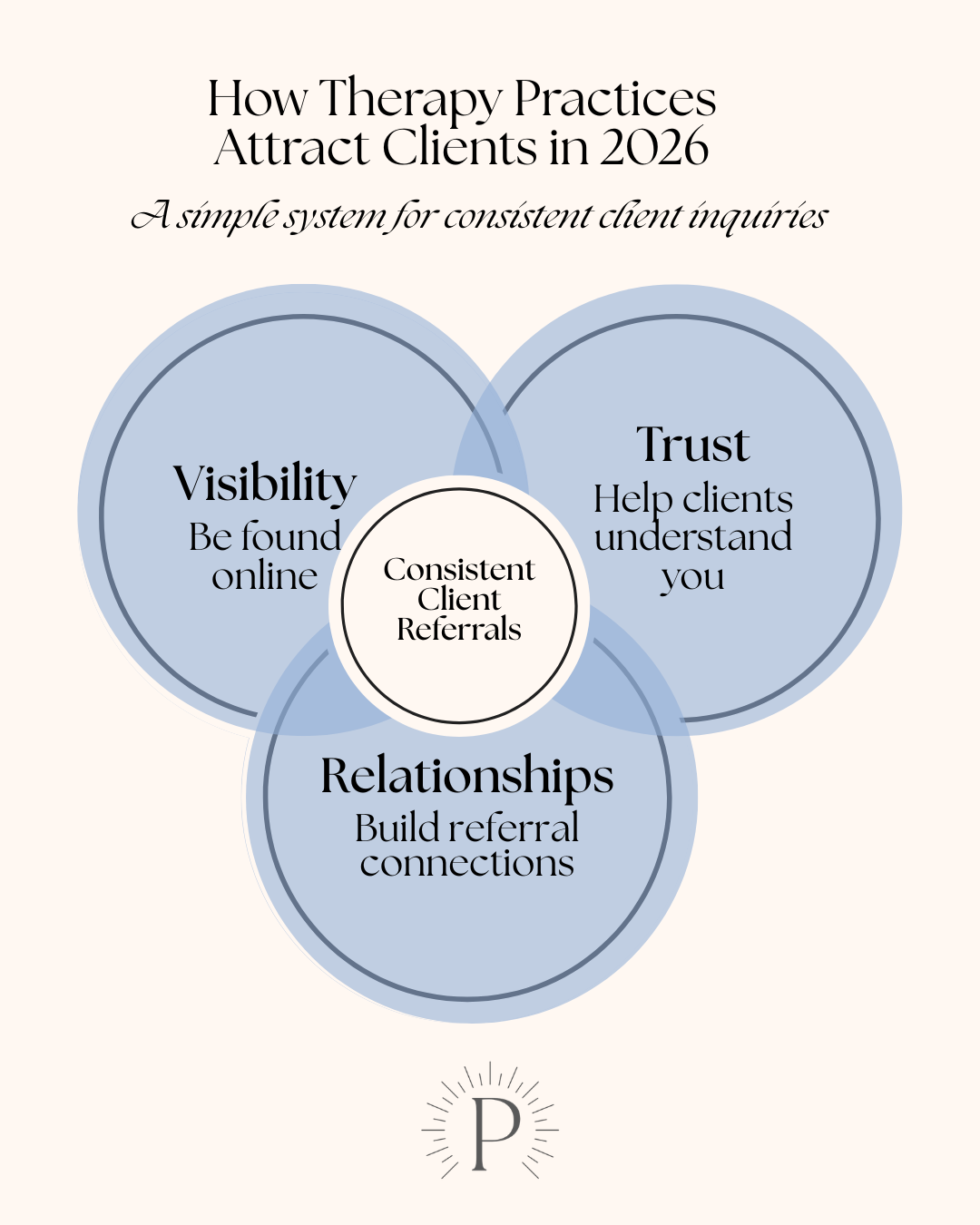
Many practice owners find it helpful to organize their marketing efforts into a clear plan rather than trying to implement everything at once.
That’s exactly why we created the 90-Day Marketing Roadmap for Therapy Practices. The guide is built around the three systems that support sustainable growth:
Visibility
Trust
Relationships
Three Marketing Actions You Can Take This Month
If you want to strengthen your marketing systems, consider starting with these simple steps:
Identify three referral partners you would like to reconnect with.
Plan a short monthly newsletter that provides helpful mental health insights.
Review your online profiles to ensure that services, specialties, and therapist bios are up to date.
Small, consistent actions often create the strongest long-term results.
Common Questions About Growing a Therapy Practice
How do therapists get referrals for their practice?
Many referrals come from professional relationships with physicians, schools, and other therapists. Maintaining these relationships through occasional communication can strengthen referral flow.
Is email marketing necessary for therapy practices?
Email is not required, but it can be a helpful way to stay visible and share helpful information with your community.What is the most important marketing strategy for therapists?
The most effective approach combines local visibility, referral relationships, clear specialties, and consistent educational content.
Next Steps for Therapy Practice Owners
Growing a therapy practice rarely depends on one strategy alone. Sustainable growth usually comes from combining visibility, referral relationships, and consistent communication with your community.
If you would like a simple way to organize these strategies, download the 90-Day Marketing Roadmap for Therapy Practices. The guide provides practical steps therapy practice owners can follow over the next three months to attract more therapy clients.
At Private Practice by Design, we support therapy practice owners who want to grow their practices while staying aligned with their clinical mission and values.